

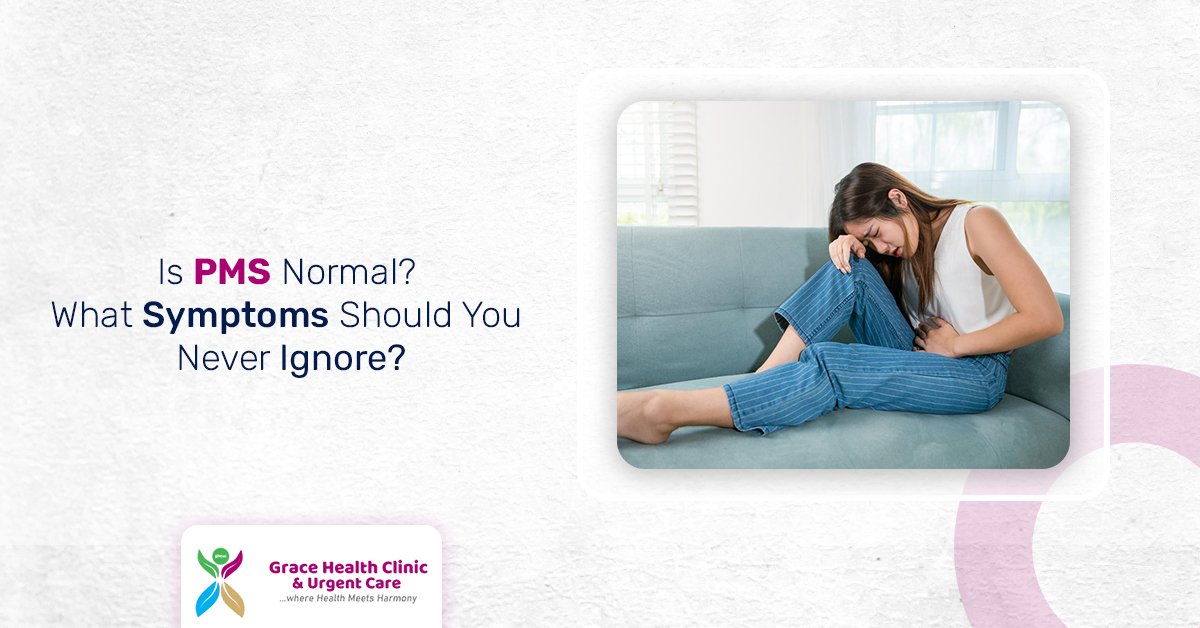
Many girls and women feel changes in their bodies a week or two before their period. This is called PMS, or Premenstrual Syndrome. PMS is very common. Many women experience it eventually.
Below, we will cover what PMS is, normal symptoms, signs of something more serious, and when to seek help.
What Is PMS?
PMS happens when your hormones change before your period. These changes can affect your body and your mood.
Some women feel mild symptoms; others feel stronger ones. These variations are natural, and all women have a way with their bodies.
At Grace Health Clinic & Urgent Care, our women’s health team often hears questions like:
- Is PMS normal?
- Why do I feel this way each month?
- Should I worry about these symptoms?
PMS usually stops when your period comes or after a couple of days. If your symptoms improve when you are resting, with heat, or just taking some simple painkillers, they are likely to be normal.
Common PMS Symptoms
Many PMS symptoms are mild and may not stop you from doing your normal activities. Common signs include:
- Cramping with light to moderate pain
- Bloating or feeling puffy
- Mood changes, including feeling down, grumpy, or tearful
- Mild headaches
- Acne or skin changes
- Food cravings
- Breast tenderness
- Trouble sleeping
- Low energy
- Mild back pain
Symptoms come and go. They must not remain the entire month or get too powerful so that you cannot perform your normal duties. When they do, your symptoms could not be normal PMS.
Is PMS Normal? What Symptoms Should You Never Ignore?
While PMS is common, some symptoms can be unusual. It’s important to recognize these signs. Don’t ignore them. Call a doctor if you notice any of these:
- Very heavy bleeding. In case you pass through a pad or a tampon within one hour, or you pass much more blood than usual.
- Very bad pain. If cramps are so strong that you cannot walk, sleep, or do school or work.
- Feeling very sad or hopeless. In case of mood difficulty in doing daily activities or even thinking of causing self-harm.
- Big changes in sleep or eating. If you sleep too much or cannot sleep at all, or you stop eating or eat too much.
- Fainting or passing out. This is never normal.
- Fever with period problems. A fever can mean an infection.
- Chest pain or trouble breathing. Get help right away.
- Very long periods. If your period lasts more than 8 days, or you bleed between periods a lot.
- Sudden heavy mood swings or panic attacks. If these happen every month and are very strong.
Why It Is Important Not to Ignore These Symptoms
Your body works diligently to stay healthy. When something is off, it needs your help. Ignoring strong or unusual symptoms can allow small problems to grow into bigger ones.
Premenstrual dysphoric disorder (PMDD) is one of these problems. PMDD is like evil PMS. It makes daily life hard, but early care helps prevent pain and problems.
Requesting help when you realize you are wrong is a powerful decision. There is no embarrassment or excess. You have a right to be healthy and safe in your body.
How Grace Health Clinic & Urgent Care Can Help
Women’s health changes at every age. Grace Health Clinic & Urgent Care understands that every woman has a unique body and unique needs. Our Women’s Health services are designed to support you at every stage.
At Grace Health Clinic & Urgent Care, you can get help with:
- Period irregularities
- Painful periods
- PMS and strong mood changes
- Pelvic pain
- Birth control options
- Family planning
- STD testing and treatment
- Menopause symptoms
- Urinary concerns
- Breast health
- Hormone problems
- Thyroid issues
- Weight management
- Nutrition support
- Mental health concerns
We offer walk-in visits, same-day appointments, virtual care, and easy online booking. Our team listens with care and helps you understand what your body is going through.
When Should You See a Doctor for PMS?
You should visit Grace Health Clinic & Urgent Care if:
- Your PMS stops you from going to school, work, or doing normal activities
- You feel severe pain
- Your mood swings feel out of control
- You think your symptoms are getting worse over time
- Your period becomes irregular
- Your bleeding becomes too heavy
- You feel worried, scared, or unsure about what is happening to your body
Get help before symptoms worsen. You’ll feel better sooner.
Taking Control of Your Health
Your body is precious. It deserves attention, love, and proper care.
Control your health by understanding PMS. If symptoms are troubling, see a clinician.
Grace Health Clinic & Urgent Care provides women’s health care. You can visit us for same-day appointments, walk-ins, or virtual care. The team is ready to listen and help you find the right care.
If you have any such condition, you can contact our doctor at Grace Health Clinic & Urgent Care. Call 360-200-1696 or visit the clinic’s website to book an appointment or learn more.
FAQs
Can PMS change with age?
PMS symptoms change with age due to hormones, pregnancy, and lifestyle.
Can stress make PMS worse?
Yes, stress can intensify PMS symptoms. This can lead to:
- Stronger cramps
- Mood changes
- Increased tiredness