

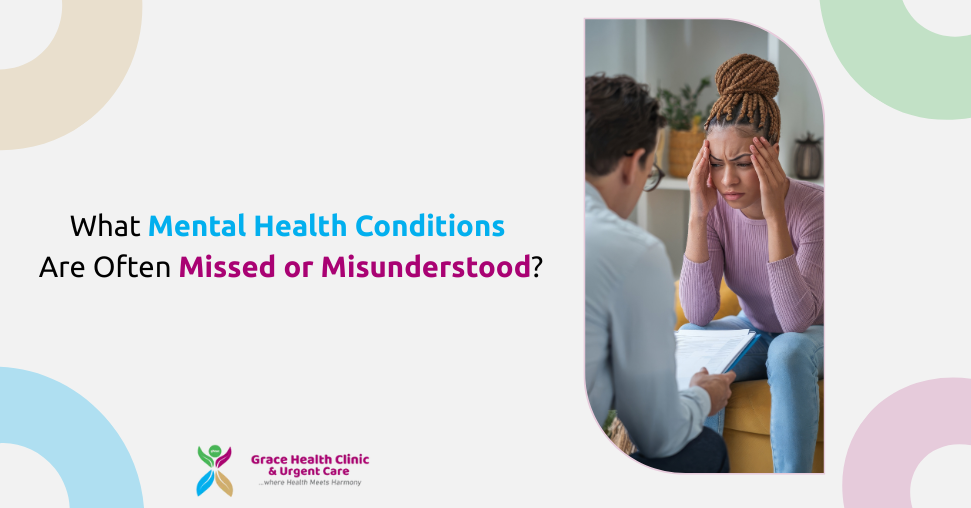
You could experience that sense where something seems a bit off, but you’re unable to pinpoint it.
Perhaps you’ve stayed silent about it because you question its accuracy.
Specific mental wellness challenges are pretty adept at remaining concealed.
High-Functioning Depression
Encountering depression doesn’t always involve an inability to rise from bed. At times, you:
- Maintain your presence at your workstation daily
- Prepare meals
- Handle household chores
From an external viewpoint, your existence appears entirely normal.
But internally? It can feel like existing in monochrome. Functions operate, yet enjoyment is absent.
Some signs:
- Positive events occur, yet you feel indifferent
- You remain occupied as a means of avoiding emotions
- You experience fatigue that doesn’t abate with rest
- Life seems reduced to merely completing tasks
These states are often invisible to others, and sometimes even to you.
Adult ADHD
Many individuals associate ADHD solely with energetic youngsters. However, a significant number of adults also live with it. Often without a formal diagnosis.
You might have frequently heard descriptions like being absentminded or unreliable.
Alternatively, you may have already structured your entire life around managing these challenges.
Adult ADHD doesn’t always present obviously:
- Your thoughts feel chaotic, even if you appear physically still
- You excel at certain tasks while failing others
- Others may mistake your state for anxiety or low mood
If you are female, you have a higher likelihood of being missed by practitioners.
If simple activities consume you while others manage them effortlessly, your perception is valid.
Complex PTSD
When people hear PTSD, they think war veterans. But trauma comes in other forms. Complex PTSD happens when bad things have gone on for a long time.
- Childhood stuff
- Abusive relationships
- Situations you couldn’t leave
It doesn’t look like regular PTSD:
- Difficulty establishing fundamental trust in others
- A persistent and ingrained sense of personal shame
- Sudden and overwhelming emotional surges
- Recurring detrimental relationship dynamics
What others fail to see is that your nervous system adapted to function within an environment perceived as perpetually unsafe.
Seasonal Affective Disorder
Winter comes around and all of a sudden you just feel like a different person.
- There’s a strong urge to oversleep
- You crave heavy foods
- You withdraw socially
Then, as spring arrives, you return to normal. This leads to the conclusion, “I simply dislike winter.” However, this cycle repeats yearly.
SAD is essentially timed depression:
- Your spirits drop as daylight hours shorten
- There’s a strong desire to hibernate
- Cognitive clarity diminishes
Light therapy can be beneficial, as can consulting with a professional.
Why These Things Might Stay Hidden
Mental health stuff is sneaky. It builds slowly, so you adjust without noticing. Or there’s some shame involved. Society’s awkward about mental health, or you’re hard on yourself.
Also, individual manifestations vary. Your experience of depression may differ from a relative’s. Your ADHD might present unlike what is typically depicted online.
So, it’s easy to believe, “That’s not relevant to my situation.”
But do pay attention to what your gut feeling’s been telling you. You have an awareness when things aren’t quite right.
We Can Help
Mental wellness support at Grace Health Clinic: Our focus is on careful listening, and through shared effort, we arrive at insight. Empathy and understanding shape our methods.
You can choose from:
- Same-day appointments
- Virtual visits
- Walk-ins available
Contact us by phone at (360) 200-1696 or book online.
FAQs
Can mental health difficulties arise suddenly in later adulthood?
Yes.
- Big life changes
- Ongoing stress
- Hormones
- Genes
Any of these can flip a switch you didn’t know was there.
At what severity level should I seek consultation?
If it causes you distress, that is sufficient justification. There’s no need to wait until life circumstances become critical.
Is this typically covered by my insurer?
Most likely. We partner with the majority of insurance providers, and for those without coverage, we offer reasonably priced alternatives.