

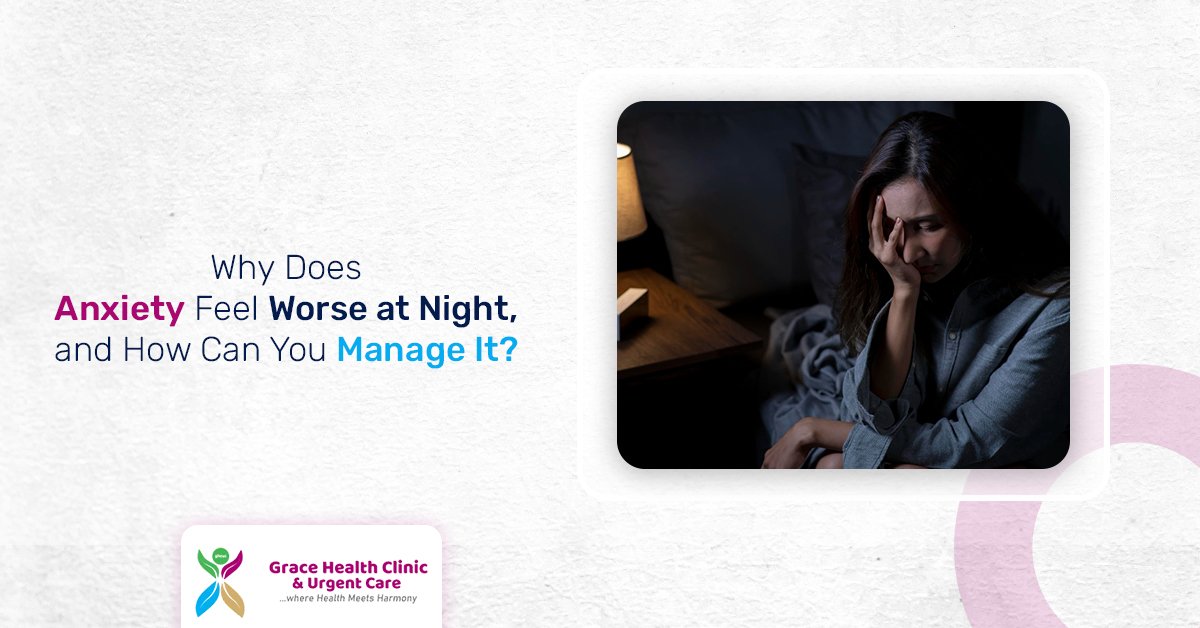
Many people feel anxious at night. You might notice you’re thinking quickly. Your heart could be racing, or you might feel anxious about today’s events or what tomorrow may bring.
But why does anxiety feel worse at night and what can you do about it? You can break free from such feelings by understanding what goes on in your body and mind.
We offer understanding and empathetic care to clients at Grace Health Clinic & Urgent Care in Marysville, WA, to help them learn how to overcome anxiety and other mental health issues.
Why Anxiety Feels Worse at Night
At night, your body and brain slow down. During the day, there are distractions. You are preoccupied with work, school, chores or communication with friends.
These distractions have the effect of forgetting about your concerns. Yet, in going to bed, the world is silent. Nothing there to keep your brain busy.
It is a silence that may exaggerate your concerns. Minor considerations that you failed to take notice of during the day can seem enormous at night.
It is also at night that your body changes. Cortisol, a hormone that helps you respond to stress, naturally goes down in the evening. While this is meant to help you relax, it can also make your brain more sensitive to anxious thoughts.
Anxiety can be complicated by the fact that your heart can beat a little faster and your breathing may seem to be irregular.
Another reason is fatigue. Your brain does not have as much energy to deal with stress because you are tired.
One thing you may find is that the problems get more difficult to resolve, or your fears become more real. Being tired may lead to excessive worry and overthinking.
Common Signs of Nighttime Anxiety
Some signs that anxiety is worse at night include:
- Racing thoughts that won’t stop
- Difficulty with sleeping or maintaining sleep
- Suffering from nervousness or discomfort in the body
- Fear or panic that appears to be an unexpected occurrence
- Being stressed by minor issues
The first step is to recognize such signs. When you know what anxiety feels like for you, you can easily handle it.
At Grace Health Clinic & Urgent Care, we help patients recognize these signs and learn strategies to calm their minds.
How to Manage Nighttime Anxiety
Although nighttime worry can seem intense, there are methods to soothe your mind and body. These approaches are easy and reliable to practice at home.
1. Create a Nighttime Routine
A routine makes your brain think that it is time to relax. You may try such basic exercises as:
- Taking a warm shower or bath
- Reading a book
- Heard soothing music or nature
- Taking a warm, non-caffeinated beverage
- Turning off the gadgets at least 30 minutes before rest
Doing the same things each night helps your body know when to sleep. It also reduces anxious thoughts.
2. Practice Deep Breathing
When you are anxious, your breathing can become fast or shallow. Deep breathing makes your body unwind. Try this simple exercise:
- Inhale slowly on a 4-count breath through the nose
- Hold your breath for 4 counts
- Exhale gradually and through your mouth 6 times
- Repeat a few times
This sends a signal to your brain that you should relax. With time, it can help one fall asleep easily.
3. Write Down Your Thoughts
Listing the concerns in a notebook can help reduce their size. At Grace Health Clinic & Urgent Care, our therapists usually suggest this method to patients prior to going to sleep.
4. Limit Stimulants and Late Meals
Caffeine, sweet or heavy food at night, will make your body more active and make you anxious. Avoid night coffee, nighttime energizers or heavy meals. Instead, bring light snacks where needed.
5. Gentle Exercise During the Day
Exercise helps relax anxiety. Try stretching or a short walk. Avoid exercise before bedtime, as it can disrupt sleep.
6. Mindfulness and Relaxation Techniques
Mindfulness is paying attention to the present moment without judgment. You can try:
- Guided meditation
- Listening to calming sounds
- Progressive muscle relaxation
These techniques can reduce your stress and allow you to sleep more.
How Grace Health Clinic & Urgent Care Can Help
Grace Health Clinic & Urgent Care cares about both body and mind. We offer many services for families in Marysville, WA. You can walk in or make a same-day or virtual visit. We also take new patients.
Our behavioral health team helps people learn skills to feel better. You can meet a certified therapist for talk therapy. A nurse practitioner or medical provider can do an overall check. If medicine might help, our team can offer psychiatry and medication support as part of a full plan.
We make care easy. We accept many insurance plans. We offer online booking, virtual care, and walk-in appointments with same-day availability.
Final Words
Night anxiety is common. It is not your fault. You can feel better with little steps. If worry is big or does not go away, you can get help that works.
If you have any such condition, you can contact a doctor at Grace Health Clinic & Urgent Care. Call 360-200-1696 to book an appointment in Marysville, WA.
FAQs
Should I take sleeping pills?
Sleeping pills are temporary and do not cure anxiety. Grace Health Clinic & Urgent Care can provide safer permanent strategies.
Can children also have nighttime anxiety?
Yes. Children may worry about school, friends, or the dark. Grace Health Clinic & Urgent Care’s Behavioral health support can help them cope.