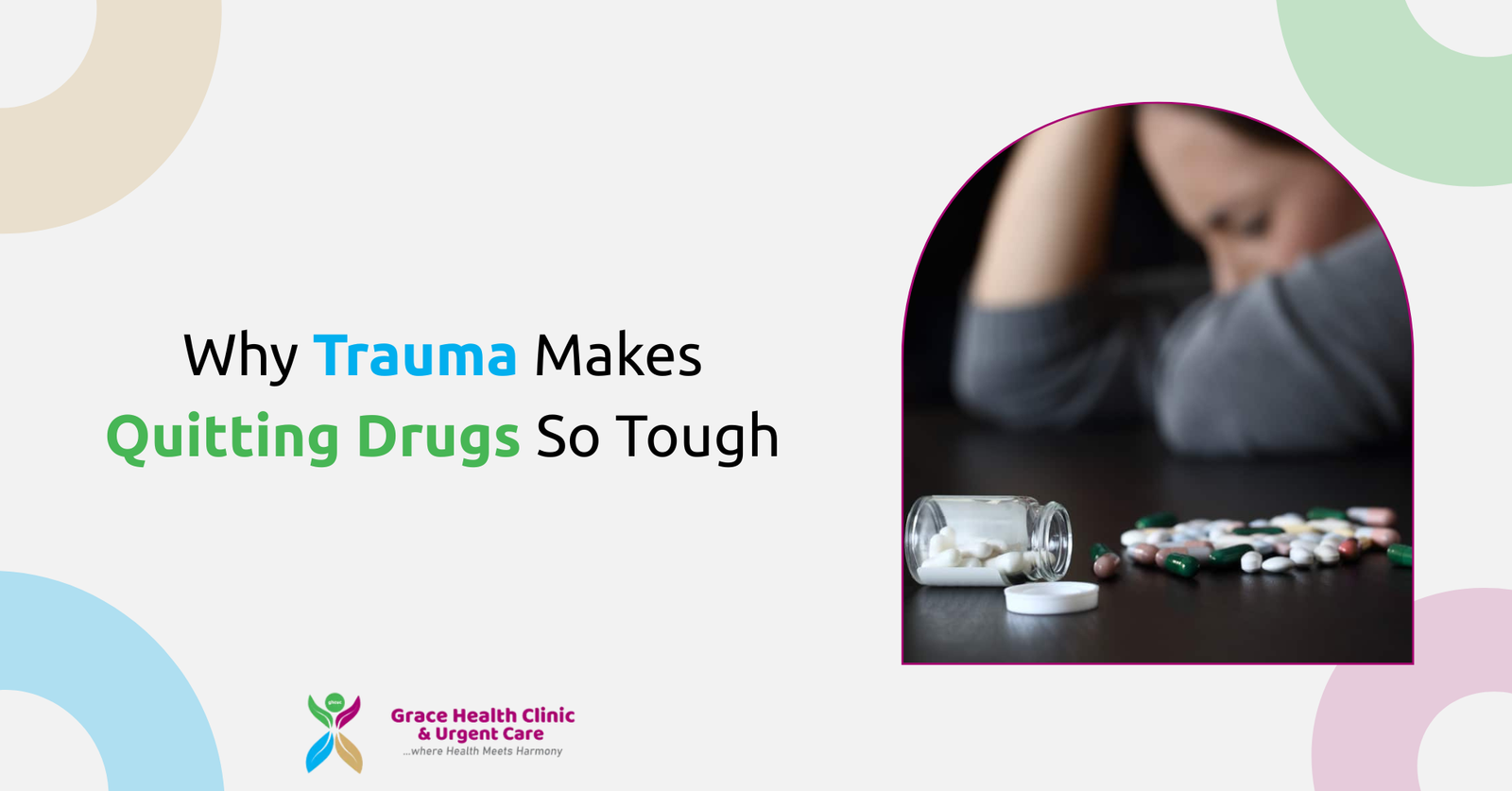
Many people want to stop using drugs. They try again and again, but it feels very hard. One big reason is trauma.
At Grace Health Clinic & Urgent Care, we focus on the whole person, not just the addiction. We offer combined behavioral health support with primary and urgent care.
Trauma can be the cause of substance use and may complicate recovery without relevant assistance.
Below, we will talk about why trauma makes quitting drugs so tough.
Effects of Trauma on the Brain and Body
When a person endures trauma, their brain remains perpetually alert. It senses danger even when it’s absent. This can lead to:
- Trouble sleeping
- Constant worry or fear
- Strong emotional reactions
- Feeling numb or disconnected
The brain also shifts how it manages stress. Chemicals that influence mood can become disrupted, making it tough to feel calm or secure.
Substances can briefly alter these feelings. They may offer short-term relief, but it doesn’t last. The brain may then start to rely on the substance to feel normal.
This isn’t a sign of weakness. It’s a natural survival response that can become harmful over time.
Why Trauma Makes Quitting Drugs So Tough
Quitting drugs is not just about stopping use. It is also emotional and mental. When trauma is not healed, it stays inside. Quitting may be even more difficult for people with trauma because:
The Brain Remembers Pain
The brain is very powerful. When someone navigates pain, the brain files that memory away. Just a smell, sound, or place reminds them of that memory. This is referred to as a trigger.
The individual might experience fear, stress, or sadness once more when a trigger occurs. Drugs may seem like the only means of relaxing these emotions. This is the reason why most people relapse.
At Grace Health Clinic & Urgent Care, we offer trauma-informed care to assist patients in handling triggers safely and systematically.
Emotional Pain Feels Too Big
Trauma can cause deep emotional pain. A person may feel:
- Fear
- Shame
- Guilt
- Anger
These feelings can feel too big to handle. In the absence of support, the individual can revert to drugs to get rid of them.
Grace Health Clinic & Urgent Care provides supportive behavioral health services. These services help patients safely process their emotions.
Lack of Safe Support
Many people with trauma do not feel safe discussing it. They are afraid of being judged or disbelieved. Having no safe room, the healing process cannot commence. This makes them remain in a pain and drug use cycle.
Grace Health Clinic & Urgent Care provides a kind and safe space where people can share their feelings.
Physical Effects on the Body
Trauma does not only affect the mind. It also affects the body. A person may have:
- Trouble sleeping
- Fast heartbeat
- Body pain
- Constant stress
These symptoms can make the recovery extremely difficult. Drugs can appear to be the sole means of feeling normal.
The Importance of Integrated, Trauma-Informed Care
To recover, a person needs help for both trauma and drug use.
At Grace Health Clinic & Urgent Care, care is provided using a trauma-informed approach. This means that care should be safe, respectful and supportive, based on the entire individual and not the symptoms only.
Key principles include:
- Listening without judgment
- Respecting each patient’s story
- Creating a safe, calm environment
- Supporting emotional and physical healing together
Medication-Assisted Treatment (MAT) in Recovery
Medication-Assisted Treatment (MAT) is an evidence-based approach that can support individuals during recovery. It may help by:
- Reducing withdrawal symptoms
- Decreasing cravings
- Stabilizing brain function
- Supporting long-term recovery progress
At Grace Health Clinic and Urgent Care, we offer MAT programs as a sort of holistic approach to treatment. We provide medical assistance with emotional support so that patients can concentrate on healing rather than on passing the withdrawal.
MAT does not substitute recovery work. It is a bridge to help people safely move towards a healthier life.
Small Steps Matter
Recovery does not happen in one day. It happens step by step.
Some days will be hard. Some days will feel better.
Each step forward is important.
It is okay to ask for help. It is okay to take your time. Healing is a journey, not a race.
Signs You May Need Help
It is important to know when to seek help. Some signs include:
- Trouble quitting drugs despite trying
- intense cravings, or withdrawal symptoms
- Being overwhelmed by the experiences in the past
- Drugs to deal with mood or anxiety
- Isolation from family and friends
With such indicators, expert assistance can help considerably.
Take The First Step Toward Healing
Recovery is easier with support. Your healing and future are important.
At Grace Health Clinic & Urgent Care, we’re here to support you. We offer understanding, respect and proven care.
If you are struggling with trauma and addiction, you can contact our experienced doctors for the right guidance and treatment.
We offer walk-in care, on-site appointments, virtual care and easy online scheduling. Our team is here to support you from urgent needs to long-term recovery.
FAQs
Can someone recover from addiction if they have trauma?
Yes. Many people recover successfully. Healing takes time and often needs support like counseling, medical care and trauma-informed treatment.
How long does recovery take?
There is no exact time. It is different for each person. Some people take a short time and some take longer. It depends on their life and the help they get.
No comment