
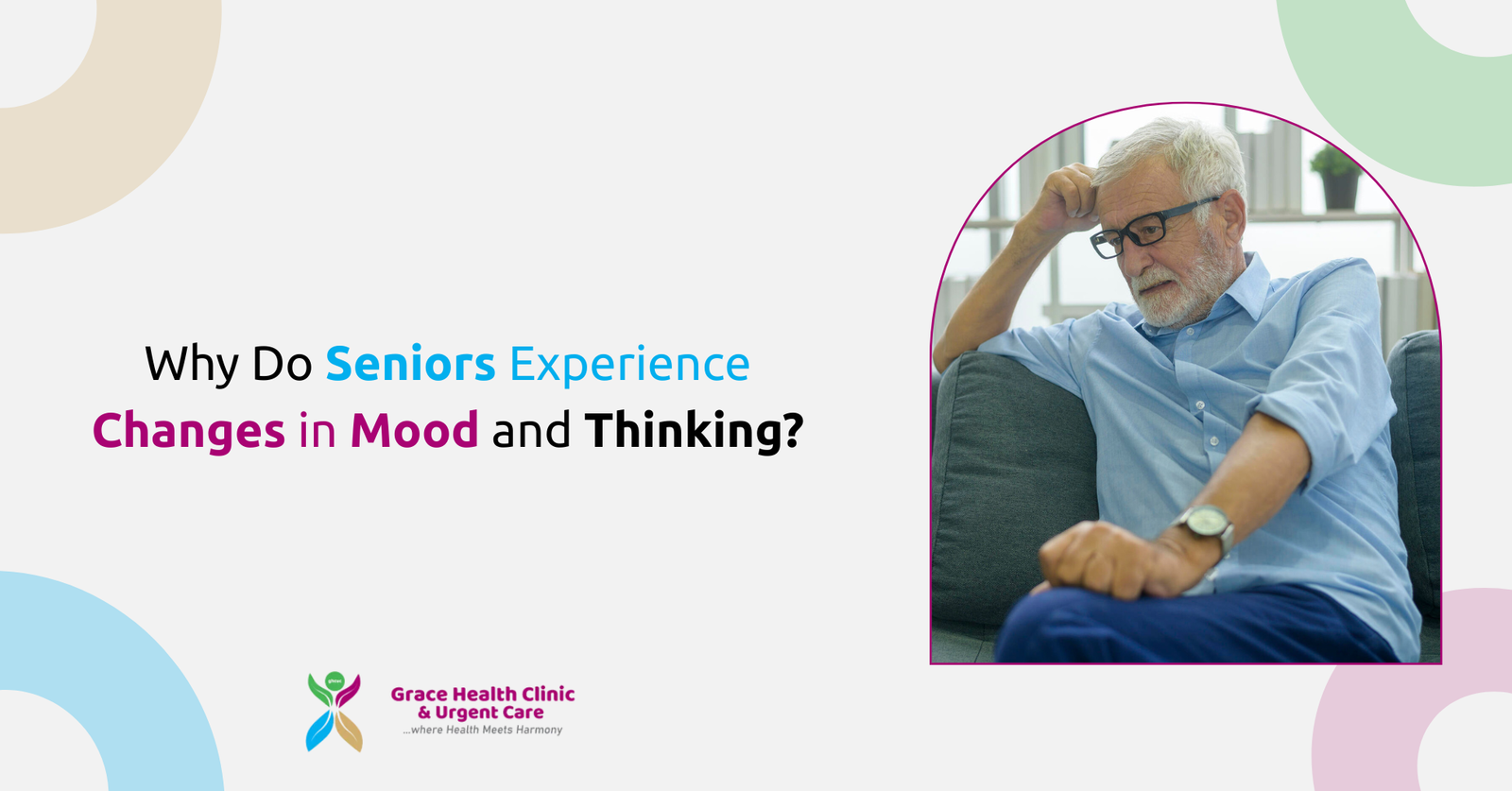
As people grow older, various changes occur in the body and mind. Some of these changes may affect how a person thinks and feels.
Families may notice that a loved one is quieter and even forgetful or sad. Such transformations are disorienting and even frightening.
At Grace Health Clinic & Urgent Care, we work closely with support seniors and their families in understanding these changes and accessing appropriate care for a better quality of life.
Below, we will help you understand why seniors experience changes in mood and thinking.
Understanding Mood and Thinking Changes in Seniors
Mood and thinking are part of our brain health. Mood is our attitude. Thinking is how we learn, remember and make choices.
Mild changes that can be observed as people grow older are:
- Taking long names
- Feeling tired more often
- Needing more time to make decisions
These minor changes are regular in the process of aging. But bigger changes may need attention and care.
Warning signs that need evaluation:
- Getting lost in familiar places
- Strong mood swings
- Trouble speaking or understanding
- Deep sadness or fear
Why Do Seniors Experience Changes in Mood and Thinking?
There is not just one reason. Many things can affect the brain and emotions as people get older.
Let’s look at the most common causes.
Changes in the Brain
The brain changes with age. It may not work as fast as before.
Some brain cells may slow down or stop working. This can make it harder to:
- Remember things
- Focus
- Learn new skills
These changes can also affect mood. A person may feel frustrated or upset when they cannot think as clearly as before.
At Grace Health Clinic & Urgent Care, we offer evidence-based interventions to maintain these changes and ensure health of emotional well-being.
Physical Health Problems
Many seniors live with health issues. These can affect both mood and thinking.
Common health problems include:
- High blood pressure
- Diabetes
- Heart disease
These conditions may slow down blood flow to the brain. When the brain does not get enough oxygen, thinking may become slower.
Illness may also cause pain that makes one feel sad or angry.
Mental Health Conditions
Some seniors develop mental health conditions such as:
- Depression
- Anxiety
Depression is not just feeling sad. It can also cause:
- Loss of interest in activities
- Trouble sleeping
- Low energy
Anxiety can cause:
- Worry
- Fear
- Restlessness
These conditions can affect both mood and thinking.
Grace Health Clinic & Urgent Care offers complete mental and physical health care, including FDA-approved TMS Therapy.
Medication Effects
Many older adults take medicines every day. Some medicines can affect the brain.
Side effects may include:
- Confusion
- Memory problems
- Mood swings
Sometimes, mixing different medicines can make these problems worse.
It is very important to review medications with a doctor.
Our team offers personalized medication management to reduce risks and improve safety.
Changes in Hormones
Hormones help regulate mood and power. The aging process alters the hormone levels.
For example:
- Lower estrogen in women
- Lower testosterone in men
These changes can lead to:
- Sadness
- Low energy
- Trouble focusing
Hormonal changes are a normal part of aging. However, they can affect daily life.
At Grace Health Clinic & Urgent Care, we offer men’s and women’s health services. We help manage health changes safely and with care.
Memory Conditions
Some seniors may get conditions like dementia or mild cognitive impairment.
This can lead to:
- Forgetting recent events
- Trouble speaking or understanding
- Confusion about time or place
These changes are more serious and need medical care.
At Grace Health Clinic & Urgent Care, we do screening at an early stage and provide further assistance to treat these conditions
Loneliness and Social Changes
Many seniors face changes in their social lives.
They may:
- Retire from work
- Lose friends or loved ones
- Live alone
Loneliness can have a big impact on mood. A person may feel:
- Sad
- Isolated
- Unimportant
Over time, loneliness can also affect thinking and memory.
Poor Sleep
The health of the brain is highly dependent on sleep.
Many seniors have trouble sleeping. They may:
- Wake up often
- Sleep for short periods
Poor sleep can cause:
- Irritability
- Forgetfulness
- Trouble focusing
Good sleep helps the brain stay strong.
Lack of Physical Activity
The body and brain work together. When the body moves, the brain stays active too.
If a person is not active, they may:
- Feel tired
- Think more slowly
- Feel low in mood
Simple activities like walking can help improve both mood and thinking.
Poor Nutrition
Food gives the brain energy. A poor diet can affect how the brain works.
Seniors may:
- Eat less
- Skip meals
- Miss important nutrients
This can lead to:
- Low energy
- Confusion
- Mood changes
Nutritious meals contribute to a sound mind.
When Should You Be Concerned?
Some changes are normal. But others may be a sign of a bigger problem.
You should seek help if you notice:
- Sudden mood changes
- Severe memory loss
- Confusion that gets worse
- Loss of interest in life
- Changes in behavior
How Can Seniors Stay Healthy in Mind and Mood?
Brain and emotional health can be supported in several ways.
- Stay Active
The constant activity is beneficial to the brain. Light exercise, or stretching, can help.
- Eat Healthy
Low-carb balanced diets of fruits, vegetables and protein help the brain.
- Stay Social
Communicating with friends and family may help alleviate loneliness and improve mood.
- Keep the Mind Busy
The brain is kept busy reading, doing puzzles, or learning something new.
- Get Good Sleep
A normal sleep pattern enables the brain to rest and rejuvenate.
- Talk to a Doctor
Through regular check-ups, issues are easily detected.
Take the First Step Today
Changes in mood and thinking in seniors often come from a mix of aging, health issues, emotional stress, and lifestyle choices. Although they are typical changes that are noticeable, they cannot be overlooked when they start impacting everyday life.
With timely support, most of these issues can be successfully addressed and enhance the quality of life along with their independence.
At Grace Health Clinic & Urgent Care, our attention is on the overall physical and mental health care. We offer behavioral health care services and continuous health medical care based on the needs of older adults.
Appointments are available in person, as walk-ins or through virtual consultations.
FAQs
Can depression in seniors be treated?
Yes. Depression in older adults is treatable with therapy, medication, or a combination of both.
Does loneliness affect brain health?
Yes. Loneliness over the long term may lead to depression and cognitive impairments.
No comment