
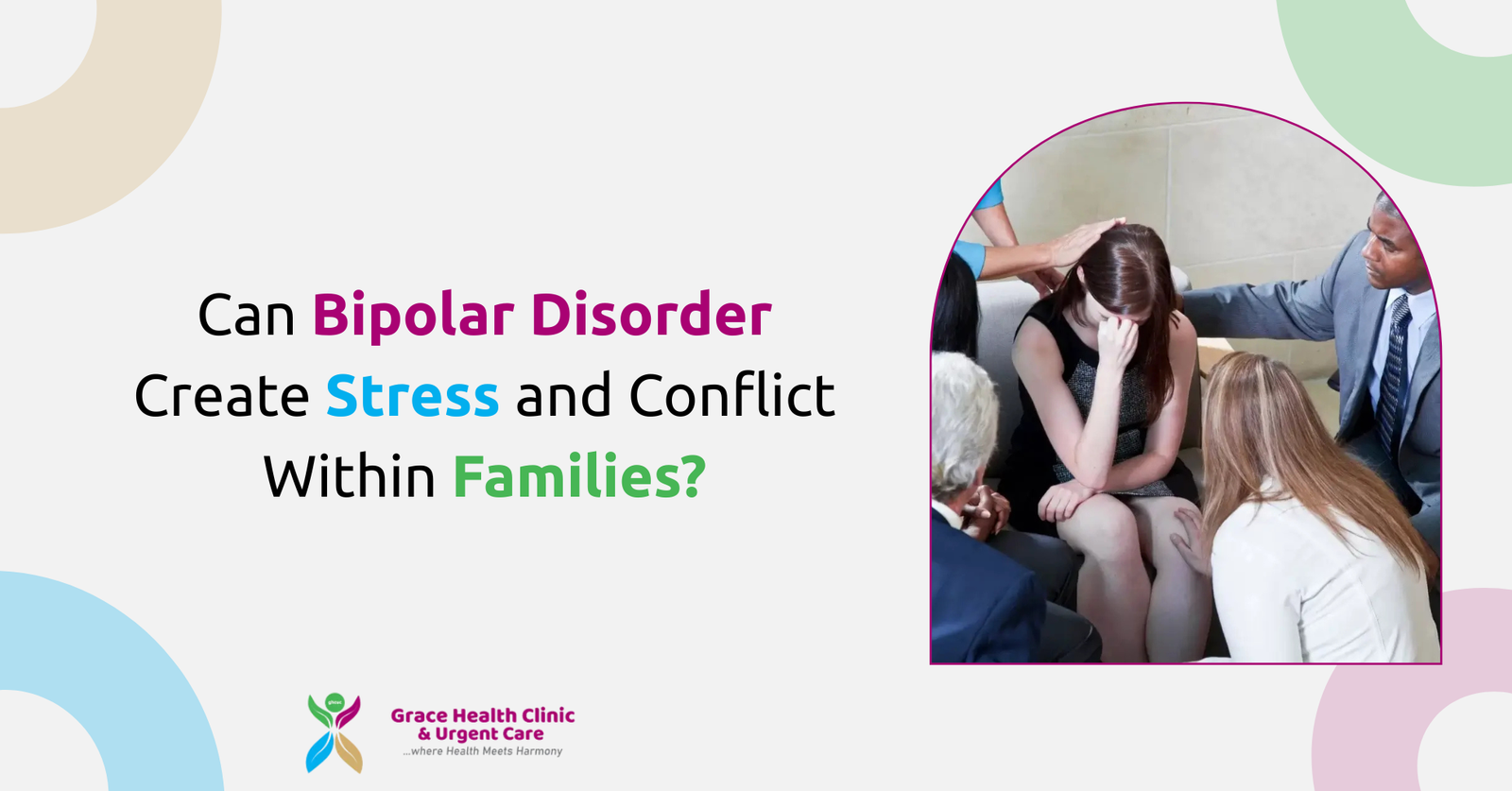
Mental health conditions often affect more than just the individual experiencing symptoms.
Bipolar Disorder impacts the whole family. It causes mood swings and behavior changes. These can affect everyone around the person with the disorder. The families might be confused, overwhelmed, or not know how they should react.
We provide our services to people and families with bipolar disorder at Grace Health Clinic & Urgent Care regularly. Families can move past conflict and stress. Support and care help them find understanding and stability.
Let’s look at how bipolar disorder can cause stress and conflict in families. We’ll also discuss ways loved ones can come together to heal.
What Is Bipolar Disorder?
Bipolar disorder is a mental health condition characterized by extreme mood swings. These moods can vary. They include high-energy phases called mania or hypomania and low-energy phases known as depression.
In manic episodes, an individual can:
- Feel particularly active or euphoric
- Act impulsively or take risks
- Have difficulty sleeping
- Speak rapidly or have racing thoughts
During depressive episodes, a person may:
- Feel sad, hopeless, or withdrawn
- Lose interest in daily activities
- Struggle with concentration
- Experience changes in appetite or sleep patterns
These mood swings are not just temporary changes, they may be so severe, uncontrollable and disruptive to everyday living and family relationships.
It’s important to remember:
- Bipolar disorder affects brain chemistry and behavior
- It is not a preference or an individual weakness
- Support and treatment may change life greatly
At Grace Health Clinic & Urgent Care, our mental health providers present detailed bipolar disorder assessment and treatment strategies to assist the patients in restoring their emotional balance and recovering their relationship with the family.
How Bipolar Disorder Can Create Stress and Conflict Within Families
Changes in mood and behavior are usually first observed by the family members. The unstable condition of bipolar disorder may present difficulties resulting in either stress or conflict in the family.
- Emotional Stress
It is emotionally draining to see a loved one subjected to extreme mood changes. Family members can undergo:
- Fear or concern over the safety of the individual
- Sudden outbursts or irritability, dissatisfaction
- Sadness or helplessness during depressive episodes
These feelings may accumulate over time and influence the mental health of family members.
- Communication Challenges
Communication may be a problem with bipolar disorder. A person can be over-talkative, interrupt others or argumentative during a state of mania. They can also isolate themselves during a depressed state.
- Misunderstandings may be experienced in case feelings are not expressed
- Family members might be neglected or rejected
- Tension can become more enhanced when the family members react with frustration
- Financial Strain
Manic episodes may lead to impulsive spending, risky investments, or even legal issues. This can put pressure on the family’s finances, causing:
- Arguments over money management
- Stress about bills and savings
- Fear of long-term financial instability
- Changes in Roles and Responsibilities
When a family member has bipolar disorder, the rest of the family often changes their routines. They may also take on extra responsibilities.
- Caregivers might be burdened with the responsibilities
- Children can also assume the roles of adults and this can influence their emotional development
- Partners can be neglected or strained by the caregiving responsibilities
- Social Isolation
Families might skip social events because mood episodes can be unpredictable or they feel embarrassed. This can lead to:
- Reduced support networks
- Increased stress from feeling isolated
- Strain in relationships with extended family and friends
Why Family Conflict Can Occur
Conflict doesn’t mean a family is unhealthy. The simple fact of not understanding it and having to live with a chronic condition can cause it. Some typical causes of conflict are:
- Differing opinions on treatment or medication
- Frustration with repeated mood episodes
- Emotional exhaustion from caregiving
- Miscommunication or misinterpretation of behavior
Conflict often shows stress. It’s not a personal failure. Families can respond with patience and kindness when they understand this.
The Role of Professional Help
Family stress and conflict can intensify without effective management of bipolar disorder. Seeking professional help may be vital.
- Therapists or supporters assist families in developing better communication and coping mechanisms
- Psychiatrists provide medication management and treatment guidance
- Support groups connect families facing similar challenges
At Grace Health Clinic & Urgent Care, we have fully equipped mental health services which encompass assessment, counseling and medication counseling. We deal with families to develop individualized plans and meet the needs of both the individual and the family.
How Families Can Reduce Stress and Conflict and Support Recovery
Bipolar disorder can create challenges, but families can take steps to reduce stress and improve relationships.
Helpful strategies include:
- Educating the family about bipolar disorder so everyone recognizes symptoms and treatment
- Supporting continual intervention, including therapy and medications as advised
- Creating stable routines for sleep, meals and daily activities
- Set healthy boundaries to protect everyone, including defining personal limits and managing disruptive behavior
- Have open and honest conversations by scheduling regular check-ins and using calm language
- Consulting counseling or family therapy to improve communication
- Prepare a crisis strategy with emergency contacts and steps to ensure safety
At Grace Health Clinic & Urgent Care, we often guide families on the appropriate way to ensure healthy boundaries and find a way to provide caring and compassionate care.
Final Thoughts
Bipolar disorder can create stress and tension within families, but it doesn’t have to dictate family dynamics. With proper support and treatment, restoring stability, enhancing relationships and boosting quality of life is achievable.
At Grace Health Clinic & Urgent Care, we provide mental health assessment, treatment and prescription based on the needs of every person and family. Walk-ins are welcome and we accept new patients.
Dial 360-200-1696 or book an appointment and receive the support you deserve to have.
FAQs
Can bipolar disorder be managed successfully?
Yes. With proper therapy, medication and support, people with bipolar disorder can lead stable and fulfilling lives. Grace Health Clinic & Urgent Care offers guidance and treatment.
Are children affected when a parent has bipolar disorder?
Children may experience emotional stress or confusion, but with proper support and understanding, they can still grow up in a stable and loving environment.
No comment