
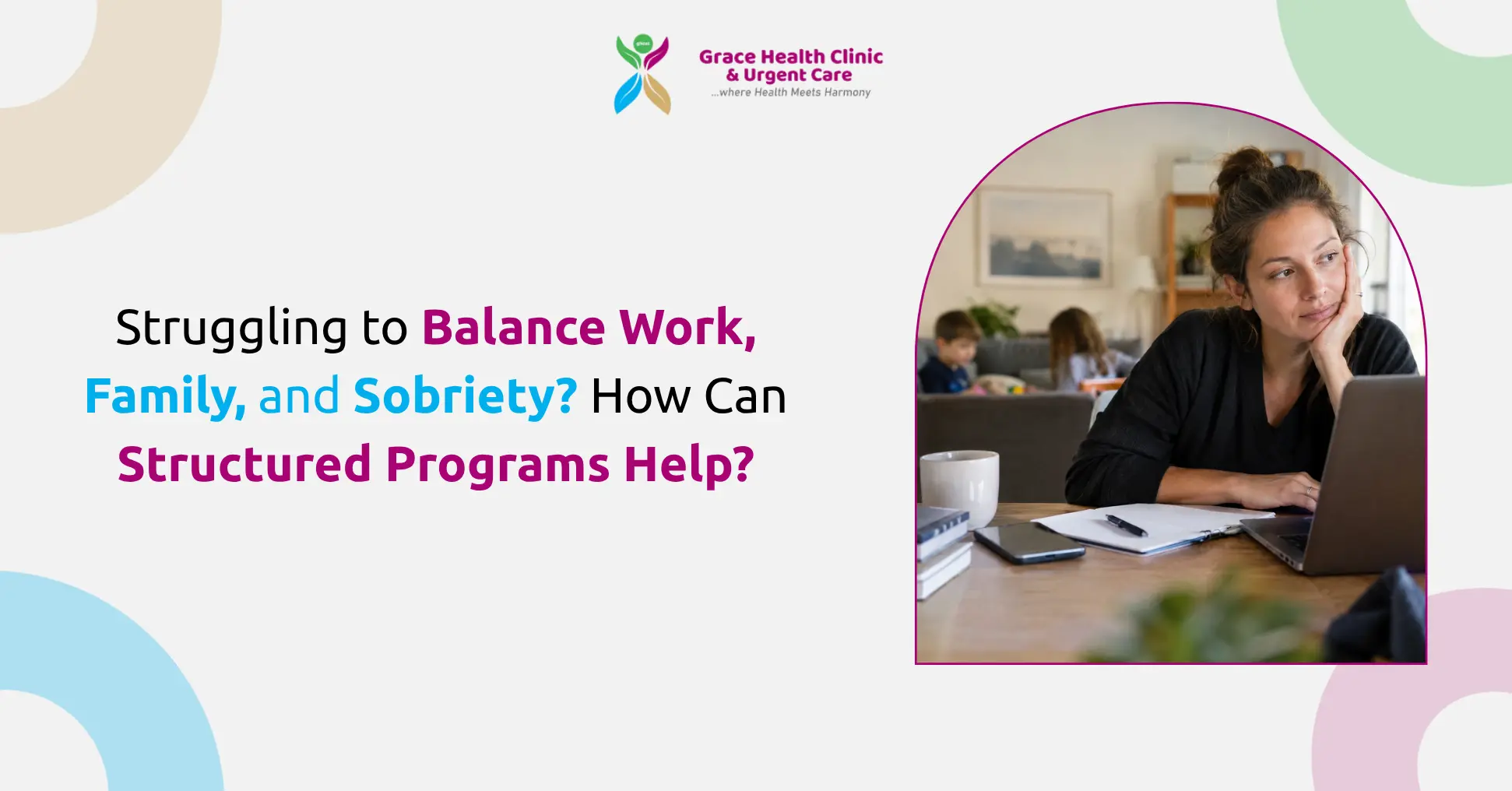
Structured programs help you balance work, family and sobriety by giving you a clear daily plan. They offer support groups and safe steps to build healthy habits. These programs guide you every single day so you never have to guess how to stay sober while living your life.
Life doesn’t pause when you’re trying to become clean. You still have to go to your job and care for your kids. This may be a very heavy load. It’s difficult to do everything alone. The guided plan makes things easy.
At Grace Health Clinic & Urgent Care, our behavioral health services include health checks, one-on-one therapy and medication support when needed. We work to provide structured care that fits each person’s needs and life.
Why Is Balancing Work, Family and Sobriety So Hard?
Trying to do everything at once can pull you in three different directions.
- Work Pressure
Work pressure looms large. You face expectations to arrive on time, complete tasks and maintain focus. If you are tired, your work might slip.
- Family Needs
Your child, spouse or parents need your love, time and attention. When you’re stressed out either emotionally or physically, it becomes difficult to be the parent or partner you’d like to be.
- Sobriety Maintenance
It is a work in progress each day to stay sober. Cravings, bad moods and old habits can sneak up on you when you feel overwhelmed.
Without careful planning, these three things crash into each other. You might:
- Prioritize work over therapy
- Respond to family members with irritability due to cravings
However, implementing a structured program can help break this cycle. It allows you to effectively manage all three areas.
What Is a Structured Sobriety Program?
A structured sobriety program is a carefully planned treatment method for a person struggling with addiction who does not want to use alcohol or drugs but still has responsibilities to handle in their day-to-day life.
You don’t have to guess, there is a clear plan of action. This schedule includes therapy sessions, medical checkups and skill-building workshops.
There are different levels of these programs.
Some require partial hospitalization, which involves receiving treatment during the day at a clinic and returning home at night. Others do very well in an intensive outpatient program.
These options let you sleep in your own bed and see your family every evening.
How Do Structured Programs Help You Manage Work Stress?
Stress is a major trigger for relapse in the workplace. Deadlines, difficult bosses and long hours can quickly drain your mental energy. An organized program can help you deal with these professional stressors without resorting to unhealthy substances.
Here are some of the specific career support benefits these programs offer:
- Teaching Coping Mechanisms
Counselors help you identify specific work triggers. They provide workplace practices, such as deep breathing or mindful breaks, that you can do when feeling “overwhelmed” at your workstation.
- Time Management Skills
Recovery programs focus on routine. Learning to block out your time effectively can help you leave work at work and conserve personal time for recovery.
- Setting Healthy Boundaries
You will learn how to refuse unreasonable requests. Maintaining boundaries around your energy is important to protect your sobriety in the workplace.
- A Safe Place
Group therapy will allow you to express your work frustrations to people who really understand.
How Do These Programs Help Your Family?
When one person struggles with substance use, the entire family suffers. Conflict arises, trust is lost and kids may grow confused and afraid.
Structured programs promote healing by bringing families together. Family therapy is a type of therapy in which trained counselors help families talk about hurt feelings in a safe space.
Communication skills development helps you with the following:
- Listen to your partner
- Express your needs without anger
- Engage more fully in family life
As you get healthier, you are more engaged at family dinner parties, school activities and movie night.
Your family will want you to be happy and prosperous. Seeing you take part in a structured program enhances trust.
Is an Outpatient Program Better Than Inpatient Care?
If you want to get better, you have to decide between inpatient (you stay at the clinic) and outpatient (you visit the clinic, but live at home). A program that takes place in the adult’s place of residence may be ideal for busy adults with children.
| Feature | Outpatient Structured Programs | Inpatient Structured Programs |
| Time Commitment | Flexible hours (evenings or weekends) | 24/7 stay at a facility |
| Family Contact | You return home to your family daily | Limited visiting hours |
| Work Impact | You can usually keep working | Requires taking a leave of absence |
| Cost | Generally more affordable | Usually more expensive |
Outpatient services are designed to provide you with practical experience immediately after learning new sober skills. People with severe withdrawal risk or those who require 24-hour monitoring might benefit best from inpatient care. Ask experts for advice.
Conclusion
Balancing work, family and sobriety is tough, but you don’t have to do it alone. Structured programs provide clear steps, professional support and daily routines for success.
At Grace Health Clinic & Urgent Care, we offer:
- Comprehensive evaluations
- Individual therapy
- Medication management when needed
Our personalized care meets each patient’s unique needs.
If you’re concerned about substance abuse, consult a qualified professional. An initial assessment can help:
- Identify health issues
- Discuss treatment options
- Set realistic goals
If you or a loved one struggles with balance, contact our doctor today. We provide:
- Walk-in visits
- Same-day appointments
- Virtual care
In emergencies, call 911. For mental health or substance use crises in the United States, call or text 988.
FAQs
Can I keep my job while in a structured program?
Yes. Many programs happen at night, in the morning, or on weekends. You can work during the day and get help later.
Will my employer find out about my treatment?
No. Medical privacy laws keep your health a secret. Your boss only knows what you tell them.
How long does the structured program last?
It depends on what you need. Some last a few weeks and others last a few months. Your team will help you pick the right time.
No comment