
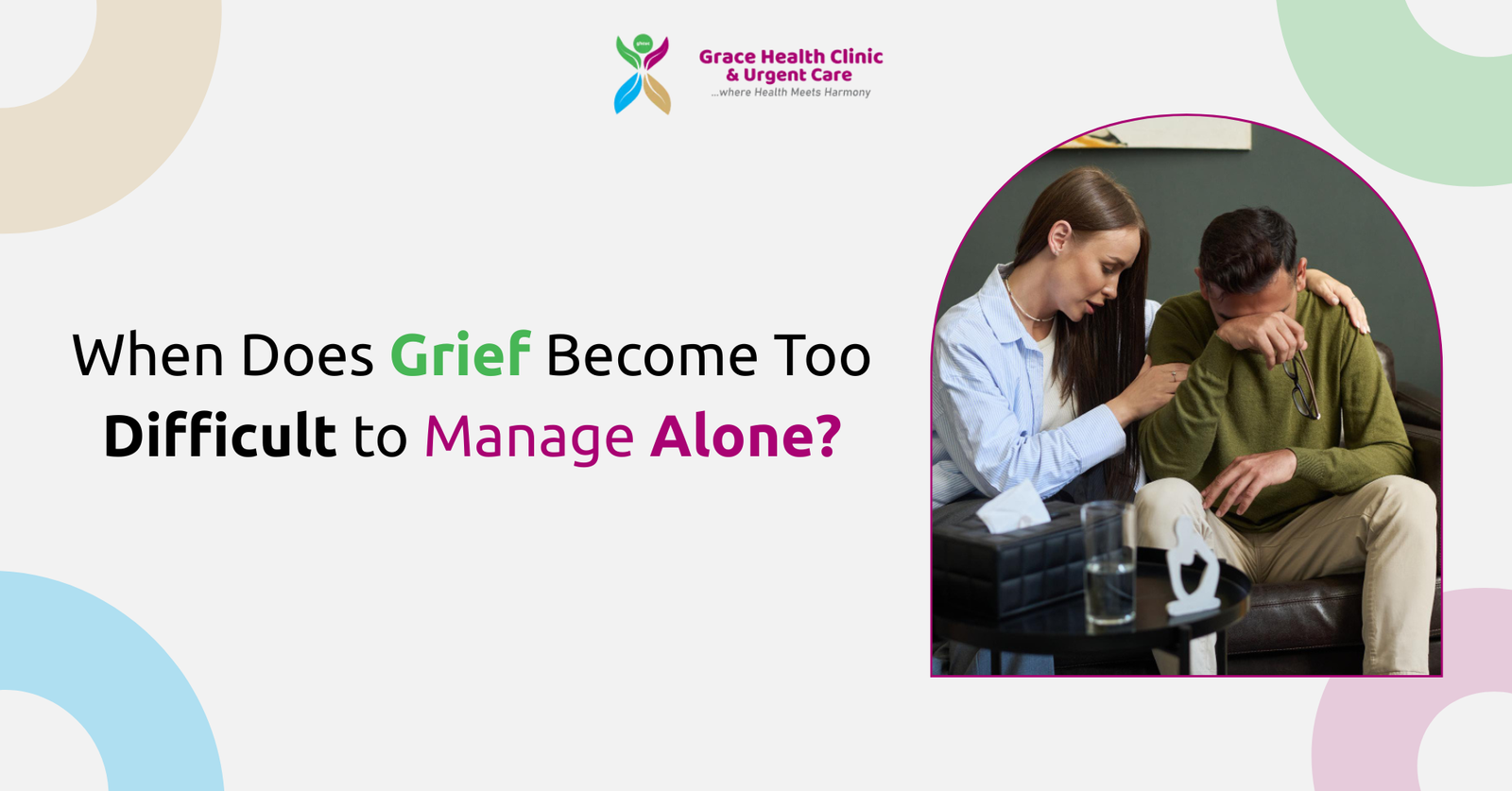
It’s extremely difficult to lose a loved one or something you love. It hurts too far inwards. It can leave you depressed, exhausted and disoriented.
When there is a big change, our hearts try to heal by expressing grief. Most of the time, sadness strikes in bursts. You may feel fine one day and then very sad the next day.
Grief affects everyone differently. Sometimes, the emotional strain can feel too much to handle.
Understanding when grief has moved beyond the normal healing process can help you seek the support you need.
At Grace Health Clinic & Urgent Care, our team provides personalized behavioral health services to help individuals find hope and balance.
Understanding the Grieving Process
Grief is more than simply feeling sad. It is a complex emotional, physical and psychological response to loss. Everyone experiences grief differently and healing rarely follows a straight path.
Common emotional responses include:
- Sadness
- Shock or disbelief
- Anger
- Guilt
- Fear
- Loneliness
- Confusion
- Relief in certain situations
Grief can also cause physical symptoms such as:
- Fatigue
- Difficulty sleeping
- Changes in appetite
- Headaches
- Muscle aches
- Difficulty concentrating
- Low energy
These feelings are normal. With time and support, grief slowly gets easier.
Why Grief Looks Different for Everyone
The grief process can be different for everyone and it doesn’t follow a set schedule. Some individuals begin adjusting within a few months, while others need much longer. Factors that can impact a person’s experience with grief are:
- Your relationship with the person you lost
- Your age
- Your personality
- Your support system
- Past life experiences
- Your emotional and physical health
Some people benefit from the treatment after a few months. Others might take longer. Healing is not a straight path. Good days and difficult days often come and go.
Instead of comparing yourself to others, focus on your own journey and allow yourself the time and space to heal.
Signs That Grief May Be Too Difficult to Manage Alone
Sometimes grief becomes too hard to manage alone. Here are some signs.
Daily Life Feels Impossible
Normal day-to-day activities during the early stages of grief can be difficult. If, after several weeks or months, you haven’t been able to perform daily functions, then this may be the time to look for assistance. These responsibilities include:
- Working
- Caring for your family
- Eating regularly
- Maintaining personal hygiene
Professional support offers healthy coping tools. These tools can help make daily life easier.
Constant Feelings of Hopelessness
Grief often brings sadness, but ongoing feelings of hopelessness or believing that life has no purpose deserve careful attention.
If these feelings don’t get better, talking to a behavioral health professional can help you work through your loss and regain hope.
Severe Anxiety or Panic
Many grieving people worry about the future. Some experience anxiety that becomes difficult to control.
Signs may include:
- Racing thoughts
- Panic attacks
- Difficulty breathing
- Constant fear
- Restlessness
- Trouble relaxing
If this makes it hard to sleep, work, or talk to others, getting help can make things better.
Withdrawal from Family and Friends
After a loss, people may require “down time” Complete isolation for a long time can make the emotional pain greater, though.
When you see this behavior, you may need to seek a helping hand:
- Stopping calls
- Avoiding loved ones
- Losing interest in activities you once enjoyed
Reaching out for support helps you reconnect with people who care.
Changes in Sleep and Eating Habits
After the initial stages, eating and sleeping habits may temporarily become disturbed. This can have negative effects on mental and physical health if they persist for an extended period of time.
Look for these indicators of the emergency:
- Sleeping too much
- Severe insomnia
- Significant weight loss
- Significant weight gain
- Low body temperature
If you can reduce the symptoms in the early phase, recovery may be improved.
Using Alcohol or Drugs
Some people try alcohol or drugs to feel better. However, this is only temporary and may exacerbate issues.
A healthier support and treatment are safer and more beneficial.
Persistent Feelings of Guilt
Some people keep thinking about what they “should have done.”
It is normal to experience a little guilt. However, if you always take responsibility, counseling will help you feel better about yourself and think better.
Thoughts of Self-Harm
Seek professional assistance immediately if grief expresses itself in thoughts to harm oneself or if one feels that life is not worth living.
Always listen to these thoughts. During these most challenging times, compassionate mental health care can offer you an opportunity to find protection, support and hope.
When Grief Becomes Complicated
For some, the feelings of loss never cease for many months or years. This is sometimes termed “complicated grief” or “prolonged grief” and involves an experience where grief is ongoing and prevents the person from feeling better about the loss because the experience of loss persists.
Signs may include:
- Constant longing for the person who died
- Feeling emotionally numb
- Difficulty accepting the loss
- Avoiding reminders of the loved one
- Feeling stuck in grief with little improvement over time
Individuals can gradually adjust to a professional treatment that honors the memory of the loved one.
How Professional Support Can Help
Seek help does not make you a weak person. It means you are trying to feel better and heal.
At Grace Health Clinic & Urgent Care we care about individuals who are feeling sad, worried or stressed. Our doctors, nurses and therapists work together to support you.
We provide you with care you can count on. This may include:
- Talking with a therapist so you can share your feelings
- Learning simple ways to cope with sadness and stress
- Getting help from our mental health team for worry, anxiety, or grief
Grief can affect your mind and your body. You may be feeling tired, depressed, or unwell. We check your entire health and make you feel great step by step.
You Do Not Have to Face Grief Alone
Grief can be overwhelming. When it affects your life, relationships, or health, get help.
At Grace Health Clinic & Urgent Care, our team gives support and creates a tailored treatment plan for every patient.
Contact us to schedule an appointment if you or a loved one needs help managing grief.
FAQs
Is it normal to miss someone years later?
Yes, it’s normal. If grief affects your daily life, consider seeking help.
Can therapy make grief disappear?
No, therapy doesn’t remove grief, but it helps you understand your feelings and move forward.